| Don't let your heart health go up in a puff of smoke 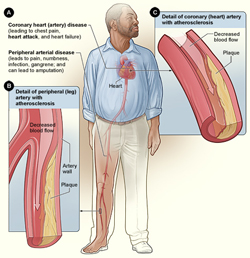 You've probably seen a photo of pink, spongy lungs from a healthy person positioned next to black lungs from a smoker. While you may know how bad smoking is for your lungs, did you know that smoking and secondhand smoke also can damage your heart? You've probably seen a photo of pink, spongy lungs from a healthy person positioned next to black lungs from a smoker. While you may know how bad smoking is for your lungs, did you know that smoking and secondhand smoke also can damage your heart?
Smoking harms many parts of your body, including your heart, blood vessels, eyes, mouth, reproductive organs, bones, and digestive organs. Any amount of smoking, even light smoking or occasional smoking, damages the heart and blood vessels. Secondhand smoke also can harm your heart and blood vessels. This is the smoke that comes from the burning end of a cigarette, cigar, or pipe, or the smoke that's breathed out by a person who is smoking. Avoid secondhand smoke. Don't go to places where smoking is allowed, and ask friends and family members who smoke not to do it in the house and car. How smoking and secondhand smoke affect your heart and blood vessels The chemicals in tobacco smoke may harm your heart and blood vessels by: - Thickening your blood and making it harder for your blood to carry oxygen.
- Increasing your blood pressure and heart rate. This makes your heart work harder than normal.
- Lowering your HDL ("good") cholesterol and raising your LDL ("bad") cholesterol.
- Disturbing your normal heart rhythms.
- Damaging your blood vessel walls, making them stiff and less elastic.
Damage to the heart and blood vessels increases your risk of atherosclerosis (hardening of the arteries). This can increase your risk for coronary heart disease (also called coronary artery disease), which in turn can lead to chest pain, heart attack, and heart failure. Smoking is also a major risk factor for peripheral arterial disease (P.A.D.). In this condition, plaque (made up of fat, cholesterol, and other substances) builds up in the arteries that carry blood to the head, organs, and limbs. People who have P.A.D. are at increased risk of heart disease, heart attack, and stroke.
Learn more about how smoking affects your heart and blood vessels. How quitting smoking can be helpful One of the most important things you can do to reduce your risk of heart disease is to avoid tobacco smoke. Quitting smoking will: - Reduce your risk of developing or dying from heart disease.
- Decrease your risk of atherosclerosis and blood clots.
- Reduce your risk of sudden cardiac death, a heart attack, and death from other chronic diseases, if you already have heart disease.
Quitting will benefit you—no matter how much or how long you've smoked! How to quit smoking Quitting smoking and avoiding secondhand smoke can begin to reverse heart and blood vessel damage right away. Quitting smoking is possible, but it can be hard. Millions of people have successfully quit smoking and remained nonsmokers. Seek out smoking cessation counseling and support. Nearly all States have free quit lines, which can be found by calling 1–800–QuitNow or by visiting www.smokefree.gov. Talk with your doctor about medicines and over-the-counter products that can help you quit. These medicines and products really help many people quit successfully. Some nicotine replacement products (patches, gums, lozenges) are available without a prescription. Medications that can help you quit smoking, such as bupropion and varenicline, are available by prescription. Strategies to quit smoking include: - Make a list of your reasons for wanting to quit.
- Write a contract to yourself that outlines your plan for quitting.
- Know what triggers you to smoke. Do you smoke after a meal, while driving, or when you're stressed? Develop a plan to handle each trigger.
- Set a quit date, and let those close to you know about it.
- Remove cigarettes, ashtrays, and lighters from your home, office, and car.
- Try new activities to replace smoking. For example, instead of smoking after a meal, take a brisk walk.
- Take up hobbies and activities that keep your hands busy, such as knitting or carpentry.
Explore more strategies to quit smoking. Resources Learn more about other conditions that are affected by smoking: - COPD (chronic obstructive pulmonary disease): Are You at Risk?
- Bronchitis
- Cough
Upcoming Events - National COPD Awareness Month, November, 2010
- World COPD Awareness Day, Wednesday, November 17, 2010
- The Great American Smokeout, Thursday, November 18, 2010
|