| Are you having a heart attack?  Sometimes, it isn't just indigestion. American Heart Month (February) is the perfect time to review the signs and symptoms of a heart attack and learn what to do if they occur in you or someone you know. Sometimes, it isn't just indigestion. American Heart Month (February) is the perfect time to review the signs and symptoms of a heart attack and learn what to do if they occur in you or someone you know.
Learn the signs and symptoms The first step toward surviving a heart attack is learning to recognize the signs and symptoms. The most common signs and symptoms of heart attack, which are of sudden onset or markedly progressing in both women and men, include: - Chest pain or discomfort. Most heart attacks involve chest pain or discomfort. (However, only half of women who have heart attacks have chest pain.) The discomfort usually lasts for more than a few minutes or goes away and comes back. It can include uncomfortable pressure, squeezing, fullness, or pain in the center of the chest that can be mild or strong.
- Shortness of breath. This may occur with or before chest discomfort.
- Lightheadedness and fainting. Most heart attacks do not make you pass out right away. Instead, you may suddenly feel dizzy or lightheaded. These signs occur more often in women than men.
- Indigestion, heartburn, nausea (feeling sick to the stomach), vomiting, extreme fatigue (tiredness), or problems breathing. Women are more likely to experience nausea, vomiting, or indigestion during a heart attack. These feelings are often written off as having a less serious cause. Remember, nausea and vomiting may be signs that something is seriously wrong, especially if you have other signs or symptoms.
- Upper body discomfort. This can occur in one or both arms, the back, neck, jaw, or stomach (not below the belly button). Women are more likely to experience pain in the neck or back as a heart attack symptom than men.
- Breaking out suddenly in a cold sweat. Men who are having a heart attack are more likely to have this symptom, along with some of the above-mentioned signs and symptoms.
If you think you or someone you know may be having a heart attack: - Call 9–1–1 within a few minutes—5 at the most—of the start of symptoms.
- If your symptoms stop completely in less than 5 minutes, still call your doctor.
- Only take an ambulance to the hospital. Going in a private car can delay treatment.
- Take a nitroglycerin pill if your doctor has prescribed this type of medicine.
A heart attack occurs when blood flow to a region of heart muscle becomes blocked. If the flow of blood isn't restored quickly, the affected heart muscle becomes damaged from lack of oxygen and begins to die. Acting fast at the first sign of heart attack symptoms can save your life, limit damage to your heart, and improve recovery. Many more people could recover from heart attacks if they got help faster. Of the people who die from heart attacks, about half die within an hour of the first symptoms and before they reach the hospital. Treatment is most effective when started within 1 hour of the beginning of symptoms. Learn more about heart attacks and view an animation of a heart attack. Celebrate with The Heart Truth® throughout American Heart Month 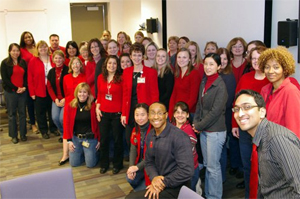 Congratulations to Andrea Smith-Ruff and the University of Michigan's Institute for Clinical and Health Research (MICHR) for submitting the photo at right. The photo was selected from among almost 100 submitted to The Heart Truth® campaign's Facebook page and is currently featured on the National Heart, Lung, and Blood Institute (NHLBI) Web site. Congratulations to Andrea Smith-Ruff and the University of Michigan's Institute for Clinical and Health Research (MICHR) for submitting the photo at right. The photo was selected from among almost 100 submitted to The Heart Truth® campaign's Facebook page and is currently featured on the National Heart, Lung, and Blood Institute (NHLBI) Web site.- Did you wear red on Friday, February 4, National Wear Red Day®? Upload your image to The Heart Truth® campaign's Facebook page and view the great photos submitted by others.
- Get involved with The Heart Truth® by planning an event, bringing the Red Dress Collection to your city, or partnering with The Heart Truth.® Learn more at The Heart Truth.®
- Follow The Heart Truth® (@TheHeartTruth) on Twitter to receive free, informative tweets about women's heart health from the NHLBI.
Popular heart health resources - The Healthy Heart Handbook for Women
- Diseases and Conditions Index (DCI): Heart Disease in Women (en español)
- The Heart Truth® Wallet Card
®The Heart Truth, its logo, and The Red Dress are registered trademarks of the U.S. Department of Health and Human Services (HHS).
® National Wear Red Day is a registered trademark of HHS and the American Heart Association.
|