| Cholesterol FAQs What is cholesterol? 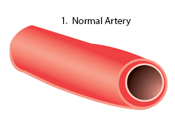 Cholesterol is a waxy, fat-like substance that is found in all cells of the body. Your body needs some cholesterol to work correctly—it's used to make hormones, vitamin D, and substances that help you digest foods. Cholesterol is a waxy, fat-like substance that is found in all cells of the body. Your body needs some cholesterol to work correctly—it's used to make hormones, vitamin D, and substances that help you digest foods.
However, your body makes all the cholesterol it needs. When you eat foods high in saturated fat, trans fat, and cholesterol, your body can make too much cholesterol. Over time, this extra cholesterol can clog your arteries and increase your chances of having a heart attack or stroke. What are HDL and LDL? 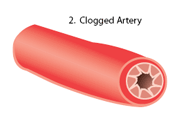 Cholesterol is carried through your bloodstream in small packages called lipoproteins. There are two main kinds of lipoproteins: Cholesterol is carried through your bloodstream in small packages called lipoproteins. There are two main kinds of lipoproteins:
- Low-density lipoprotein, or LDL, cholesterol is "bad cholesterol." It carries cholesterol to tissues, including your arteries. The higher the LDL level in your blood, the greater chance you will get heart disease.
- Remember: the L in LDL is for Lousy, and the Lower it is, the better.
- High-density lipoprotein, or HDL, cholesterol is "good cholesterol." HDL carries cholesterol from other parts of your body back to your liver for removal from your body. The higher your HDL cholesterol level, the lower your chance you will get heart disease.
- Remember: the H in HDL is for Healthy, and the Higher it is, the better!
Why is cholesterol important? The higher your blood cholesterol level, the greater your risk for developing heart disease or having a heart attack. When there is too much cholesterol in your blood, it builds up in the walls of your arteries and is called plaque. Over time, this buildup causes "hardening of the arteries," also known as atherosclerosis, so that arteries become narrowed and blood flow to the heart is slowed down or blocked.
Learn more about cholesterol What are typical cholesterol numbers and what do they mean? High blood cholesterol usually has no symptoms, so it's important to get your levels checked with a routine blood test, called a lipid or lipoprotein profile. You may need to fast (not eat any food) for 8 to 12 hours before the test. The test measures your total cholesterol, LDL cholesterol, HDL cholesterol, and triglycerides, another form of fat in your blood. If you are 20 years of age or older, it's important to have your blood cholesterol levels checked at least once every 5 years. Your doctor may test you more often if your cholesterol levels are high.
Learn more about high blood cholesterol diagnosis Cholesterol Numbers
| Total Cholesterol Level | Total Cholesterol Category | | Less than 200 mg/dL | Desirable | | 200–239 mg/dL | Borderline high | | 240 mg/dL and above | High |
| LDL Cholesterol Level | LDL Cholesterol Category | | Less than 100 mg/dL | Optimal | | 100–129 mg/dL | Near optimal/above optimal | | 130–159 mg/dL | Borderline high | | 160–189 mg/dL | High | | 190 mg/dL and above | Very high |
| HDL Cholesterol Level | HDL Cholesterol Category | | Less than 40 mg/dL | A major risk factor for heart disease | | 40–59 mg/dL | The higher, the better | | 60 mg/dL and above | Considered protective against heart disease | What's the best way to lower blood cholesterol levels? Your cholesterol levels are affected by some factors that you cannot control, such as your age, sex, and your heredity (if high blood cholesterol runs in your family). However, there are many factors that influence your blood cholesterol levels that you can control. These include what you eat, how much you weigh, and how physically active you are. The TLC (Therapeutic Lifestyle Changes) Program is a three-part program that uses diet, physical activity and weight management to help you reduce high blood cholesterol. Even if you need to take a cholesterol-lowering medication, following the TLC program will assure that you take the lowest necessary dose. The main parts of the TLC are: - Weight management: Lose weight if you are overweight, which can help lower LDL cholesterol.
- Physical activity: Regular physical activity is recommended for everyone. It can help raise HDL levels and lower LDL levels. It is especially important for individuals with raised triglyceride and/or reduced HDL levels who are overweight with a large waist measurement. For major health benefits, adults should do at least 150 minutes (2 hours and 30 minutes) of moderate-intensity aerobic activity or 75 minutes (1 hour and 15 minutes) of vigorous-intensity aerobic activity each week.
- The TLC Diet recommends that you limit consumption of foods that are high in saturated fat, trans fat, and cholesterol. Saturated fat is found in foods such as high-fat meat, cheese, milk, and butter. Trans fat is found in foods such as vegetable shortening, stick margarine, fried foods, and baked products like cookies, crackers, pies, and pastries.
Explore the TLC program (PDF File, 1,782 Kb) What are cholesterol-lowering medications? Along with suggesting that you change the way you eat and exercise regularly, your doctor may prescribe medicines to help lower your cholesterol. The main goal of cholesterol-lowering treatment is to lower your low-density lipoprotein (LDL) level enough to reduce your risk for having a heart attack or diseases caused by hardening of the arteries. Drug treatment controls but does not "cure" high blood cholesterol. Therefore, you must continue taking your medicine to keep your cholesterol level in the recommended range. The five major types of cholesterol-lowering medicines are statins, bile acid sequestrants/resins, nicotinic acid (niacin), fibrates, and ezetimibe.
Learn more about cholesterol-lowering medications 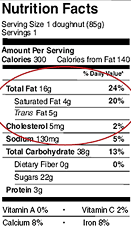 Check list of action items to lower your blood cholesterol Check list of action items to lower your blood cholesterol
| [ ] | Get my cholesterol level checked. | | [ ] | Talk to my doctor about what my cholesterol numbers mean. | | [ ] | Learn how to read Nutrition Facts labels to choose healthier foods. | | [ ] | Bake, boil, broil, or grill foods instead of frying. | | [ ] | Eat more fruits, vegetables, and whole grains. | | [ ] | Choose water or sugar-free beverages instead of soda and juice. | | [ ] | Do 30 to 60 minutes of moderate physical activity on most days. | Resources - What is Cholesterol? from the NHLBI Diseases and Conditions Index
- High Blood Cholesterol - What You Need to Know
- Your Guide to Lowering Cholesterol with Therapeutic Lifestyle Changes (TLC)
- Healthy Hearts, Healthy Homes - Do You Know Your Cholesterol Levels?
(In English and Spanish) Stay connected! - Join the NHLBI Healthy Eating community
- Follow the NHLBI on Twitter at @NIH_NHLBI
- Become a fan of Keep the Beat™ on Facebook and share heart healthy tips and recipes
™ Keep the Beat is a trademark of the U.S. Department of Health and Human Services. |