| Featured Research  Heart disease risk factors: nature vs. nurture Heart disease risk factors: nature vs. nurture
Heart disease results from both environmental and inherited factors. Some predisposing factors, such as smoking and lack of physical activity, can be readily controlled by lifestyle changes. Other risk factors, however, aren't so easily controlled. Chief among these is a family history of heart disease. As the popular saying goes, you can't choose your parents. Researchers have now uncovered the largest set of genetic variations to date that underlie high cholesterol and high triglycerides, which are heritable lipid risk factors for heart disease. The findings provide a foundation for a better biological and clinical understanding of heart disease and lipid metabolism and shed light on new therapeutic opportunities for the prevention and treatment of heart disease. Read a summary of the research studies Clinical Practice Guidelines Cardiovascular risk reduction guidelines in adults The National Heart, Lung, and Blood Institute is leading the development of an integrated set of cardiovascular risk reduction guidelines for adults using state-of-the-art methodology. Cholesterol, hypertension, and obesity guidelines are being updated, and an integrated cardiovascular risk reduction guideline is being developed. Get an update on the guidelines development NHLBI Diseases and Conditions Index (DCI) Heart disease risk factors There are a number of major heart disease risk factors, including high blood cholesterol, high blood pressure, overweight and obesity, smoking, stress, age, family history, and gender. The risk for heart disease and heart attack increases with the number of major risk factors a person has, as well as their severity. On average, people who have a low risk for heart disease live up to 10 years longer than people at high risk for heart disease. Learn more about heart disease risk factors Researcher Profile 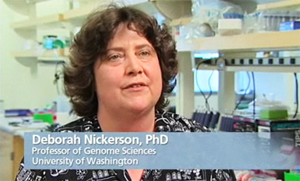 Deborah A. Nickerson, Ph.D., is an internationally known geneticist working in a cutting-edge field devoted to translating information from the Human Genome Project into ways to help people stay healthy. Supported by an NHLBI American Recovery and Reinvestment Act-funded grant, she hopes to mine genetic data gathered from NHLBI-funded population studies to find genetic contributors to heart, lung, and blood diseases. "It is the study participants that really make this effort possible," Dr. Nickerson said. "They are the real heroes in this work." Deborah A. Nickerson, Ph.D., is an internationally known geneticist working in a cutting-edge field devoted to translating information from the Human Genome Project into ways to help people stay healthy. Supported by an NHLBI American Recovery and Reinvestment Act-funded grant, she hopes to mine genetic data gathered from NHLBI-funded population studies to find genetic contributors to heart, lung, and blood diseases. "It is the study participants that really make this effort possible," Dr. Nickerson said. "They are the real heroes in this work." Meet Dr. Nickerson and watch a short video about her research NHLBI Resources NHLBI health information now available at your fingertips The National Heart, Lung, and Blood Institute (NHLBI) has updated its Web site and added more digital information including podcasts, educational videos, Web applications and downloadable fact sheets. Browse the updated online catalog to locate NHLBI materials and find out how to access NHLBI resources, from clinical practice guidelines to fact sheets, including: - Downloading specific educational materials for self-printing
- Using content in newsletters and on Web sites
- Ordering print materials in limited quantities
- Ordering printers' disks, to use when locally printing large quantities
Materials may also be ordered in printed form at no charge in limited quantities. |