| February 24, 2009 |
Participate in National Sleep Awareness Week®* National Sleep Awareness Week®*, which takes place March 1-8, 2009, is a public education, information, and awareness campaign that coincides with the return of Daylight Saving Time, the annual "springing forward" of clocks that can cause Americans to lose an hour of sleep. Here are some tools from the NHLBI that can help you learn more about sleep. |
| 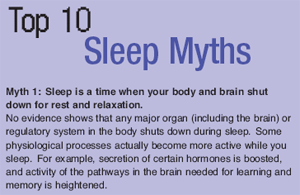 Read the Comprehensive Booklet Your Guide to Healthy Sleep Read the Comprehensive Booklet Your Guide to Healthy Sleep
This helpful and detailed booklet dispels common sleep myths; gives practical tips for getting adequate sleep, coping with jet lag and night shift work, and avoiding dangerous drowsy driving. It covers the stages of sleep, sleep debt, cues for sleep, and changes in sleep patterns over the lifespan. The booklet also has information about sleep disorders: insomnia, sleep apnea, restless legs syndrome, narcolepsy, and some parasomnias. Item #06-5271 |
|  Hand Out In Brief: Your Guide to Healthy Sleep Hand Out In Brief: Your Guide to Healthy Sleep
Just want the facts? Critical messages taken from the in-depth Your Guide to Healthy Sleep booklet are highlighted in this full-color, easy-to-read fact sheet. The fact sheet includes a section on how much sleep is enough and serves as a useful handout for patients, health fairs, community education programs, and other health events. Item #06-5800
* National Sleep Awareness Week® is a registered trademark of the National Sleep Foundation.
HIN0209SLPWK | |
Archived page, reproduced from a 2009 copy. It is reference material, not current guidance.